Every village has stories worth preserving. But what happens when the people who remember them are no longer around to share them?
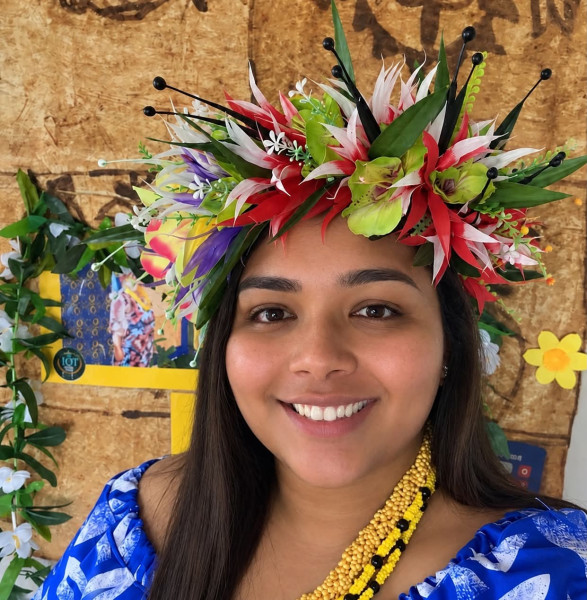
Through the Toi Makataha Fakafelo Village Council, Malakai Taufitu Simeki is working to ensure the stories, knowledge and traditions of her village are not lost. By bringing her community together to learn from its elders, she hopes to help younger generations connect with their roots and carry their heritage forward.
Born and raised in New Zealand, Malakai’s family connections to Niue span several villages, including Tuapa Uhomotu, Hikutavake, Mahinatumai and Mutalau Ululautu Matahefonua. She wanted to find ways to strengthen her own connection to her history while creating opportunities for younger generations to do the same.
Established in April 2026, the Toi Makataha Fakafelo Village Council grew from conversations between Malakai and vice-chair John Pulehega about how they could bring their village together.
They wanted to strengthen relationships within the community, allowing all generations to participate in their culture through workshops and gatherings.
“For us, it was more about creating a sense of security for our village to be represented in Niue spaces here in New Zealand. It was also about ensuring we are doing our part in protecting and preserving our cultural identity," says Malakai.
One of the council’s first major initiatives was the Toi Makataha Fakafaleloto cultural festival, held in August 2026. The festival brought together families and the wider Niue community, with guest speakers, food stalls, arts and crafts, and performances.
Organised and funded by council members themselves, the event was a chance for people to celebrate their village. It was particularly meaningful for some elders who had not returned to Niue in more than 50 years, allowing them to experience something of the atmosphere of home.
Reflecting on what the council achieved together, Malakai says the sacrifices made along the way were worth it.
“With love, we made it happen, coming together as a community, knowing we can always make great things like this (festival) happen."
The council has also drawn on the knowledge of elders from other villages to support its cultural activities. However, Malakai wants to create more opportunities for people from her village to share their own knowledge and skills.
“When other big Niue festivals like Hologa is on, or any other cultural festivals or workshops occur, we want to make sure that we utilise our own people from our own village so we can participate and represent our village.”
Preserving that knowledge is becoming increasingly important as the number of elders who hold their village’s history and traditions declines.
“We don't have a lot of matuas and tupunas left. And so they hold the knowledge and the history,” says Malakai.
The council is working to capture those stories before they are lost. At a history workshop last year, community members asked elders questions about their experiences and recorded what they learned.
“We wrote down what we learned and now we're preserving it. For me, what's important is accessibility and opportunities. That is what we are trying to achieve with the council,” says Malakai.
The council is also exploring workshops where young people can learn traditional instruments, including the guitar and drums, from people within their own village.
Her commitment to keeping Niue culture alive also extends to her own journey with Vagahau Niue.
Although her mum and auntie help keep her connected to the language, Malakai attends a weekly language class to strengthen her knowledge of Vagahau Niue, village history and Niue’s journey to independence.
Malakai believes families have an important role to play in keeping Vagahau Niue alive, encouraging people to speak the language at home and pass it on to younger generations.
Through the Toi Makataha Fakafelo Village Council, she hopes to create more opportunities for elders to share their knowledge and for younger generations to feel confident taking part in their culture, whether that’s through joining groups or participating in workshops.
“My message to the Niue youth is that not knowing the language shouldn't stop you from wanting to learn your mother tongue. It shouldn't stop you from wanting to learn the culture because it is part of your identity. Embrace it,” says Malakai.