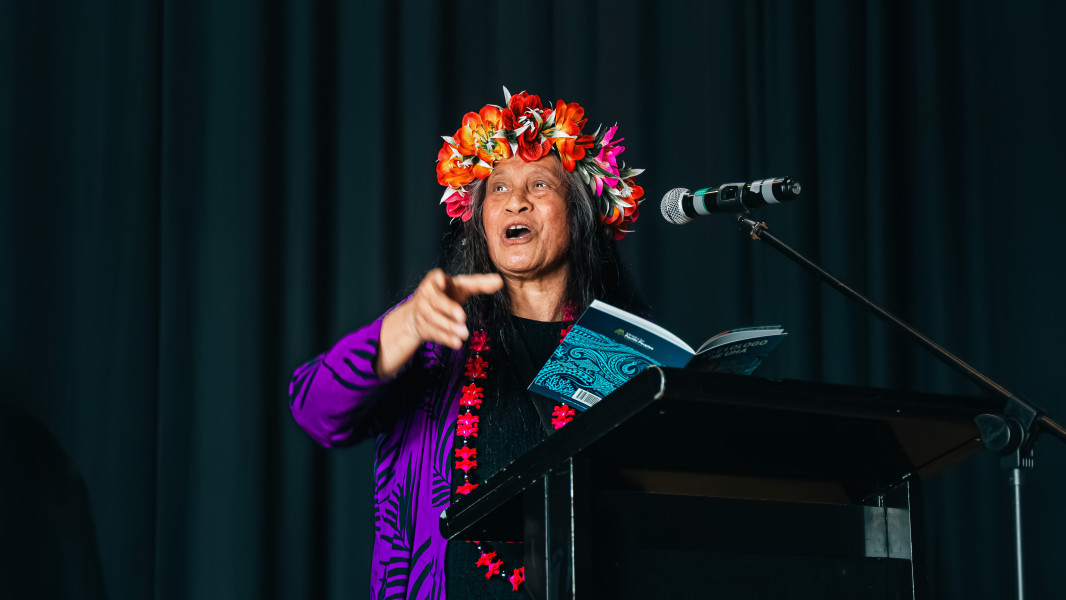
In 1977, Lino Ugamea Hufeilo Levi-Nelisi boarded a plane from Niue to New Zealand for the first time. As the plane carried her away from the island she called home, she faced an unfamiliar journey into the unknown.
“I was so scared. I’ve never been on a plane. And you don't know what is going to happen. What I did was continue to pray and just trust in the Lord that these blessings happen for a reason,” says Lino.
Nearly five decades later, Lino has built a life dedicated to education, storytelling and preserving Vagahau Niue. Through her experience as a teacher and author, she continues to help ensure the language is understood and embraced by future generations.
Born and raised in Niue, Lino was a primary school teacher for seven years before migrating to New Zealand. After arriving in Auckland, she worked briefly in a factory before working at a hotel. It was there that she began questioning whether she was where she wanted to be. Looking up, she noticed Auckland University and had a moment of realisation.
“Then I said to myself, I should be in that building instead of working in this hotel,” says Lino.
In 1983, Lino returned to study at Auckland Teachers College and resumed her teaching journey. Her experiences in the classroom, working with Māori and Pacific children, would eventually inspire her calling to writing children's stories that reflected their cultures, values and languages.
Lino wanted her students to see themselves in the books they read and connect with stories that reflected their own experiences.
“I couldn't write a book without making a brief about us Pacific peoples.”
Her first published story, O le Talo o Sione, won Best Picture Book in the 1993 AIM Children’s Book Awards. She went on to write more children's stories, including Fishing with Spiderwebs and Tane Steals the Show which were finalists in the New Zealand Picture Book Awards in the late 90s.
Writing gave Lino an opportunity to help children understand their identities and connect with their cultural heritage.
“It was important that my students who were of Māori and Pacific descent lived their language and understood their culture through the stories I'd written.”
Through her writing, Lino has championed Pacific perspectives and created stories that reflect the cultures, values and experiences of Pacific children.
That commitment to representation is closely connected to her work preserving and growing Vagahau Niue. Alongside writing, Lino has contributed her remarkable language knowledge to resources, including bilingual thesaurus work. She believes the language must be actively used and passed on, giving younger generations opportunities to read, speak and understand it.
“We can keep our language alive through poetry, through singing, through dancing. But it's critical to read it as well, to read and understand it is important,” says Lino.
Preserving a language means more than documenting words. It involves using them, understanding their meaning and ensuring the language continues to grow and evolve for future generations.
“If we want the [Vagahau Niue] culture to be alive, we need to utilise it. We need to keep it. Through books, through words, oral language. We need to keep it alive. No one can do it unless we do it ourselves.”
This belief is behind Lino's latest work. In 2026, she received support through the Ministry for Pacific Peoples' Pacific Languages Community Fund to publish three new books in Vagahau Niue. The support she received also meant she was able to take a different approach to publishing.
After years of working with established publishing professionals, Lino established Kauhi Writers Group and took the lead in bringing the books to life. She sourced illustrators, editors and publishing support from people who shared her vision.
“With the support of the Ministry for Pacific Peoples Languages Community Fund, I was able to establish my own writers' group, Kauhi. This meant I could step away from decades of working with European-led publishers and publish in a way that reflects our Pacific practices and ways of working.
“It’s a huge milestone, not just for myself but for our Pacific peoples,” says Lino.
“With the support of people I trust and appreciate, people who share my vision, including academics, a publisher and artists, alongside the Ministry for Pacific Peoples, the books came to life in just seven months.”
Lino hopes to run workshops around New Zealand to show teachers how they can use the new books to support learning and help students explore the cultural knowledge woven into the stories.
“I don't just do things for the sake of doing things. I do it for a reason. These books are created not just to be read, but to be analysed for what the stories are about. They continue to tell our Pacific stories, which will live on for decades.”