This year, we’re highlighting the enua (island) of Mangaia as part of Cook Islands Māori Language Week.
The second largest enua after Rarotonga, Mangaia has its own reo ‘enua tātakita‘i, or dialect.
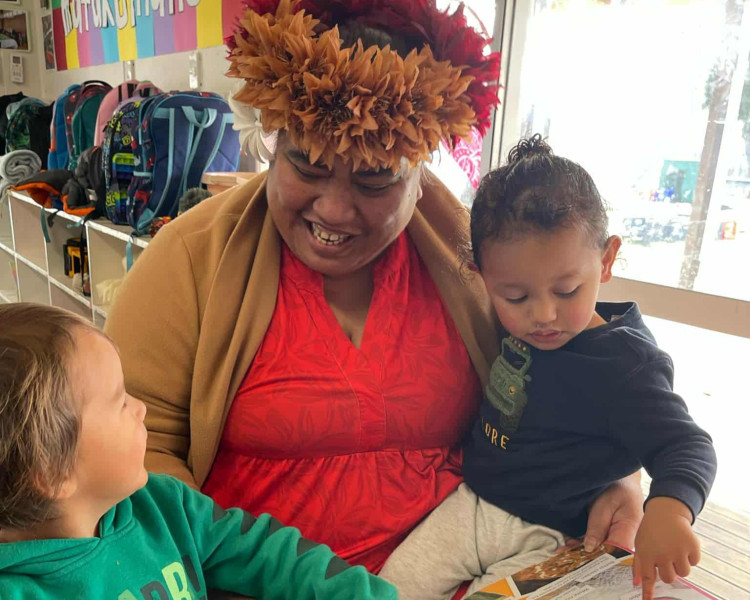
Maine Teokotai Tarai is a renowned Cook Islands Māori language teacher and advocate with heritage from Mangaia, who lives and teaches in Tokoroa. To celebrate Cook Islands Māori Language Week, Maine Teokotai shares some insights from her 20-year career helping pass on and preserve this reo.
Kia orāna, Mama Teokotai. Could you start by introducing yourself?
Ko Teokotai Tarai toku ingoa, Ko Ngatokorua Enuake Tarai tōku metuavaine. Ko Tuaere Tarai tōku metuatane. Tokoā ia matou te anau tamariki, ko au te rua i roto i to matou papa’anga. Okotai aku tamaiti, e tamaroa, ko Rico Te Akatu Ngatokorua Tarai tona ingoa, tei Merepani aia e noo ana.
In being a teacher of Cook Islands Māori for 20 years now at Tokoroa High School and dedicated leader within the wider Cook Islands community as the leader for our Ekalesia Kuki Airani, the Secretary the Mangaia Society of Tokoroa, Chairperson for the St Lukes Mokopuna and Tamariki Apii Punanga Reo, amongst many other roles and activities close to my heart, Maine Tarai is becoming more common purely to ensure pronunciation and the use of our Reo Maori Kuki AIrani.
Tell us about the workshops you hosted during Cook Islands Language Week and why you've decided to extend them beyond the language week?
During Cook Islands Language Week, there was a real hunger from people wanting to learn the language.
For many, it was about having that "aha" moment and gaining a greater understanding of how the language works. Beyond the two allocated hours, we also talked about the importance of having resources that people could take away and use to help make sense of the language.
The point of difference with these workshops was that participants had to come with a friend or family member. If you have someone you can practise with, the language becomes more meaningful. When it's someone you trust and have a good relationship with, the learning experience is more encouraging and motivates you to keep going.
When those factors come together, learners gain greater confidence to practise and use the language without always needing the teacher.
One of my favourite things is seeing siblings come along together. I remember a big sister and her younger brother attending a workshop. The 10-year-old was able to name all the utensils on the table, and my encouragement was to use those phrases at home, such as, "Omai teta'i kōkai."
Why do you think it's important to continue these workshops?
It's important for me to continue developing resources and encouraging families to use simple phrases at home. If the language is being spoken regularly at home, it has a greater chance to grow.
I also believe our learners need confidence. Confidence isn't about perfection, it's about having the courage to try. If our 10-year-olds can connect with the language now, it has a much greater chance of growing and lasting beyond our time.
We have been covering basic conversational phrases alongside content about the Cook Islands. For example, learners have been practising the names of the 15 islands of the Cook Islands through the phrase, "No'ea mai koe?" (Where are you from?), with responses such as, "No Mangaia mai au."
We've also been learning the days of the week through phrases like, "A'ea te Taokota'ianga?" using our Cook Islands Language Week programme, and responses such as, "A te Ruitoru."
When learners are given a meaningful context and can see how the language works in everyday situations, it's easier for them to follow. We use phrases such as "Kia Orana" and "Pe'ea koe" to teach rules around singular, dual and plural forms, including "te taeake," "toku nga taeake," and "e te au taeake."
We also explain how possessives work, such as the difference between "toku" and "taku." These concepts can be easy to mix up, so helping learners understand how sentences are formed gives them greater success in learning the language.
What would you like to say to anyone who would like to join your workshops?
I want to encourage everyone on a reo journey:
1. Don't give up.
Start with small phrases, keep repeating them, and keep using them. Even if it's something simple like "omai te kōkai" or "omai teta'i mereki", those phrases can help you build bigger sentences, such as "omai teta'i mereki naku" or "Omai te kapu e te vai, inē."
2. Keep singing our Cook Islands songs.
Songs like Te Noo nei au by Sunset Special are great learning tools because you rarely mispronounce words when you sing them. They also provide examples of language structures and tenses, such as: "Te noo nei au ki runga i teia nei ao, te uriuri nei au, te takauri nei." These are examples of the present tense, using the "te verb nei" structure.
3. Go to where the language is naturally spoken.
Even if you don't understand everything yet, the more you are around the language, the more you will pick up. You may start by understanding simple phrases like, "Aere mai kai mānga."
Language also comes with akono'anga and cultural practices, helping you understand why and how we celebrate our language. This includes the saying:
"Metua e ora nei, tiratiratū ei te tamariki."
If your parents are still alive, there is an opportunity to learn from them. Parents, elders and even the parents of friends can all help guide you on your language journey.
Kia mou marie ei tatou ki to tatou reo, tuatua ia to tatou reo i te au tuātau ravarai. Let us hold on to our language and speak it at all times.
You’re a proud Cook Islands woman with heritage connecting you to several islands. Could you share a bit about how those who came before you influence you?
Being of Cook Islands descent, with papa'anga connecting me to Māori of Rarotonga, Mangaia, Aitutaki, Palmerston, Penrhyn, and Tahiti, I am deeply grateful for the journey my parents and many others made before me. They left the shores of their homeland in search of better education, employment, health, and opportunities for their families.
Their migration was not simply a physical journey from one place to another. It was a journey of courage, sacrifice, resilience, and adaptation. They had to leave behind the familiar –their homeland, language, culture, family, and way of life –and learn to navigate a new environment while building a better future for their children.
Everything I have today is because of the sacrifices they made. The opportunities I have, the values I hold, and the person I have become are all part of the legacy they created through their hard work and determination.
I believe that with the opportunities and blessings I have received, comes a responsibility to honour where I have come from. I must carry forward the values that my parents brought with them – family, respect, hard work, faith, humility, service, and a strong connection to culture and identity.
For me, maintaining these values is a way of showing gratitude and ensuring that the sacrifices of my parents were not in vain. Their journey gave me a foundation, and it is my responsibility to build upon that foundation and pass these values on to my children and the generations that follow.
I am proud of where I come from, grateful for those who came before me, and committed to ensuring that their sacrifices continue to have meaning through the way I live, serve, and contribute to my family and community.
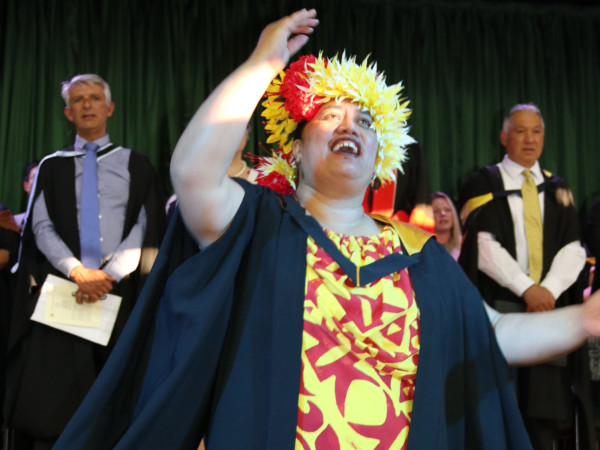
This year for ‘Epetoma o te reo Māori Kūki 'Airani - Cook Islands Māori Language Week – we’re highlighting the island Mangaia and its language. As someone with Mangaian heritage, could you tell us more about your pride for this island?
I am proud to represent the island of Mangaia and to carry with me the values and legacy of our Mangaian people. My pride in Mangaia is deeply connected to my love and appreciation for my late father, Tuaere Tarai and other prominent Mangaian leaders like Papa Jack Ngatamariki, Papa Peiaa Teinangaro. Through them, I saw the qualities that I believe are at the heart of our Mangaian identity and the values that many of our people hold dear.
A people of self-reliance, hard work, humility, faith, honour, loyalty, and a deep commitment to providing for their family. I believe many of us share these same hopes and aspirations. We want to work hard, provide for our families, own a home, and create a better future for our children.
But for me, these values became real because I saw them lived out in my father and in other Mangaian men who, at their heart, understood what it meant to be providers and protectors of their families.
Their example taught me that being a provider is more than meeting material needs. It is about responsibility, sacrifice, love, and commitment. It is about standing strong for your family, remaining humble in your achievements, and having the courage and faith to keep going when life is difficult.
What do you think people should know about Mangaia?
Here are some facts that we cannot argue with in terms of our Mangaian people.
Mangaia is renowned for having some of the best mamio, also known as taro. Our people have our own governance system under Numangatini Ariki e Nga Ono o Mangaia, reflecting our deep sense of identity, leadership, and responsibility to our island.
We are a people who seek solutions, work hard, and take responsibility for our own destiny. The golden strands of ei-pupu, our treasured shell necklaces, symbolise the resourcefulness, patience, dedication, and craftsmanship of our people. They represent the ability of our ancestors to work with what the land and sea provide and to create something of lasting beauty and value.
We hold sovereignty over our lands and carry a deep belief that our origins come from Vātea. Our identity is firmly rooted in our ancestral connections to our land, our people, and our heritage.
The landscape of Mangaia reflects the character of its people. Our raised coral fossil landscape, known as the makatea, is rugged, jagged, and challenging—yet it stands strong. Like the makatea, our people are resilient. We have learned to adapt, endure, and thrive despite the challenges we face.
Our caves stretch deep into the island, holding stories, memories, and the history of generations before us. They reflect a people with deep roots, a strong heritage, and an inner strength that has endured through time.
Mangaia is one of the oldest islands in the Pacific, estimated to be around 18 million years old, rising from volcanic origins and shaped over millions of years by the forces of nature. Its ancient landscape reminds us of the strength and endurance of our people.
We are Mangaian. We are people of the land, of heritage, of resilience, and of resourcefulness. Our island tells our story—and our people carry that story forward.
We have a saying in Mangaia: "Kia akaaka koe e vae, i kai ei koe i te ua Mangaia" - be humble in all you do and you shall eat the fruits of Mangaia.
These fruits are our identity, our character and blessings. I want people to have the same appreciation of our culture. I love the way we do things, and I share so that the people in our stories remain as a legacy, that they are not forgotten but honoured.
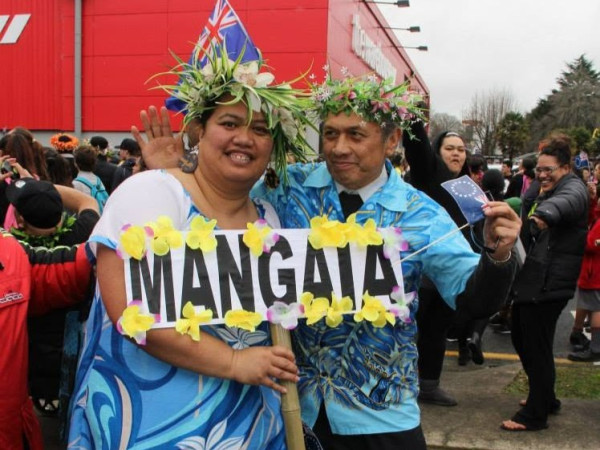
How will you be marking Cook Islands Māori Language Week this year?
I am passionate about our language, because it gives our young people identity and a heritage. In building their identity, it gives them a hope and a vision for their future that we can do all things, and language is an important part of that.
I will be celebrating by being present and encouraging others to be intentional in their learning of the language. My target this year is young families who want to give their children what they had, who see the benefits of language, culture and connection. We must be speaking the language, so I am writing resources and giving tips on how to grow more speakers of our language.
I am supporting all our groups to grow their confidence and use of Cook Islands Māori every day, especially with the students I teach. Our project at school is to capture family photos to support our papa'anga exhibition, because our children need to know their roots. In knowing who they are, there is no limit to what they can do.
Any final thoughts to share as we go into ‘Epetoma o te reo Māori Kūki 'Airani?
Language is a way of life, choosing to speak your language is not a one-week thing, it is a lifetime journey. You must love it and value it so that it becomes embedded in who you are.
Kia mou marie tatou ki to tatou reo, kia ora to tatou iti tangata. We must hold on to our language so that our people will survive.
Meitaki for sharing these beautiful reflections with us, Maine Tarai!
Find out more about Cook Islands Māori Language Week and download assets and resources to help you celebrate.