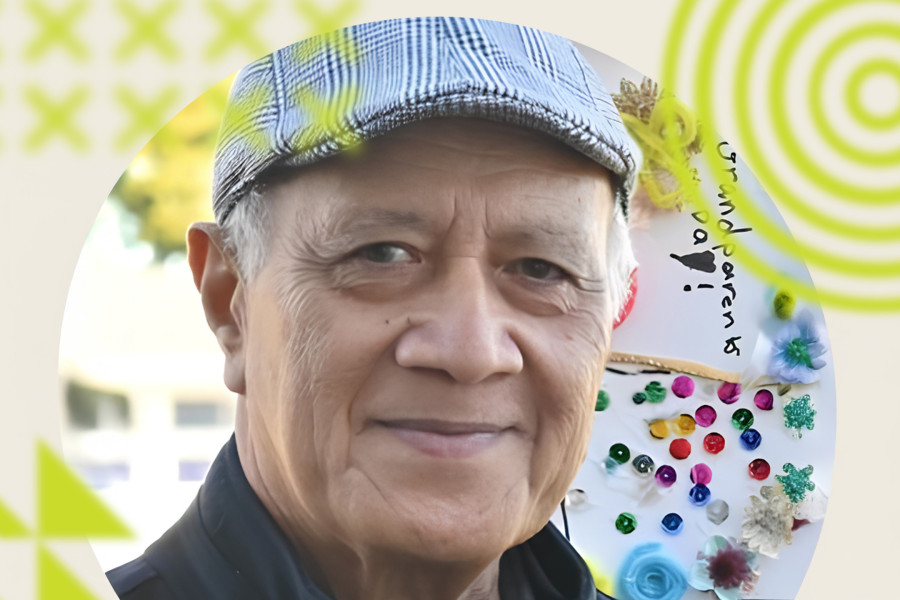
For Sefita, keeping Lea Faka-Tonga alive is about more than preserving a language. It is about ensuring future generations can continue to connect with their culture and heritage.
“I think it’s important to speak up and focus on ensuring that Tonga should act urgently to guarantee that its languages thrive forever in its birthplace.
“We should emulate those countries who have successfully done this and made sure that their languages remain powerful within their domains. It will take time and it will be incremental, but that’s the only way to guarantee its permanency because it will continuously be replenished and trickled down and through the education system.”
Having grown up in Tonga before moving to Aotearoa New Zealand, Sefita has spent decades learning, working and advocating for the importance of Lea Faka-Tonga.
His own relationship with language began at school in Tonga, where English was the expected language of communication.
“As soon as we put our grey uniform on, that meant we had to speak English. It was the language we had to speak in school.”
After arriving in Auckland from Tonga on a scholarship, Sefita continued his education in Aotearoa. His background in journalism has also given him a better understanding of the power of language and storytelling, and the role they play in keeping identity and culture alive.
For Sefita, that work begins in the islands but extends wherever Tongan people live.
That global connection is particularly important during Tongan Language Week, when communities around the world come together to celebrate and strengthen Lea Faka-Tonga.
This year, Sefita and the Tongan Language Society Inc.(Sosaieti Lea Faka-Tonga Inc.) are putting Tongan music and songwriting at the heart of their celebrations.
The theme for Tongan Language Week is ‘Ko 'etau hiva, ko e fe'unu mahu'inga ia ki he mo'ui 'a e Tonga - Our music is a vital strand of our Tongan culture.’
To bring the theme to life, the Tongan Language Society Inc. Sefita is a part of in Auckland is hosting a songwriting competition on a global scale, inviting members of the Tongan community to write their own songs in Lea Faka-Tonga.
Around 300 to 400 people are expected to take part in the online workshop.
“This year’s language week is an important contribution to the survival of our language. We’ve got a whole week planned. We’ve invited several members of our community to have a go at writing an original song.”
For Sefita, initiatives like this are about much more than celebrating the language for one week each year. They are about creating opportunities for people to use Lea Faka-Tonga, particularly across the Tongan diaspora.
“I think the language issue for all of us, because of the diaspora, is a global issue. It’s not just in New Zealand.”
Sefita says there are lessons to be learned from countries where languages have remained strong across generations. But ultimately, he says, the survival of a language begins with the next generation.
“Language dies when the next generation don’t speak it.”
He says the decline can be seen when children in Pacific communities begin speaking English instead of their heritage language, even in the islands.
“That’s where the breakdown begins.”
His message to parents is simple: give children the opportunity to hear and speak their language from an early age.
“If you speak to your children when they’re young in Tongan and in English at the same time, just do it. Because in that way it will become more natural for them.”
For generations of Pacific families, language has traditionally been nurtured through the home, church and wider community. Sefita believes those spaces remain essential to ensuring Lea Faka-Tonga continues to thrive.
The challenge, he says, is not simply to celebrate the language during Tongan Language Week, but to create an environment where Lea Faka-Tonga is heard, spoken and valued every day.
And through music, storytelling, education and the collective efforts of Tongan communities around the world, Sefita hopes Lea Faka-Tonga will continue to be heard, and spoken, for generations to come.