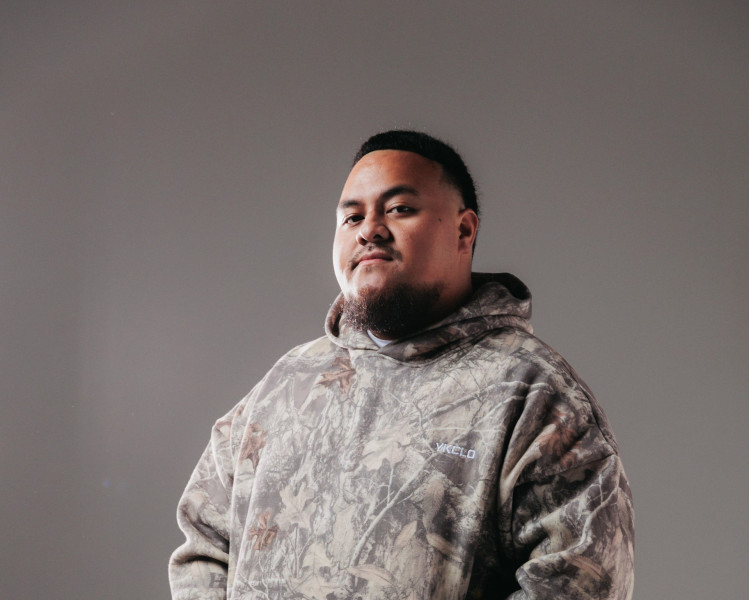
Think traditional Tongan songs and beats, add a bit of reggae and R&B, and you get 27-year-old Tongan musician Folau Atuekaho.
Let’s take it back to when Folau was a child. He grew up on Taunga, a small island in Vavaʻu, Tonga, where many of his musical inspirations come from today.
“I grew up in Tonga, and I didn't come here until 2008. And just being able to look back and appreciate the little things growing up, it’s been a real blessing.”
Those memories continue to shape Folau’s music, along with the sacrifices his family made to give him a new life in Aotearoa New Zealand.
“I came from nothing, and then I have all this space here to be able to do something great. That's honestly what's inspiring me to create music. I've got nothing to lose.
When I create and release music, especially Tongan music, I'm representing the people that helped me move here and sacrificed all their time to get me where I am now.”
When Folau arrived in Auckland for the very first time, everything felt different. He spoke only lea faka-Tonga and suddenly found himself surrounded by English.
“I just knew that in order to survive in a community where it's just English 24/7, I had to really learn to adapt. So, I was watching TV and just picking up words from the ads was my way of learning how to speak English.”
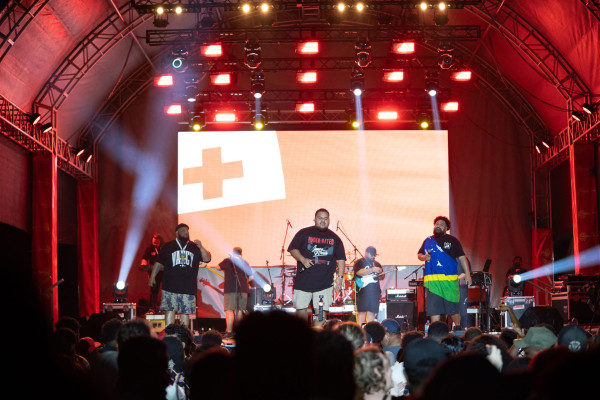
Today, he has built a successful music career, including three nominations at the Pacific Music Awards between 2024 and 2026.
He has also worked as a backing vocalist for well-known Pacific artists, including J Boog, as well as Māori artist Stan Walker.
Much of Folau’s music draws on traditional Tongan songs, alongside original music inspired by his upbringing, family and community.
Folau says that speaking Tongan gives people a stronger connection and pride in who they are.
“I feel like once you start learning or when you're able to speak Tongan, it's a whole deeper feeling of just being proud of being Tongan or who you are. But if you’re able to understand and speak it, you'll feel like you're on a bigger level of being proud.”
The late Pacific musician Fiji also helped Folau feel confident recording and performing in lea faka-Tonga.
“One thing I really appreciated with Fiji was learning to be comfortable in our own language, especially with music, because I get a lot of the ‘you shouldn't do Tongan music’, because you're only limited to Tongan crowds or Tongan gigs.
I think Fiji is probably one person that's really made me feel comfortable being Indigenous and recording music in my own language.”
Folau refuses to see Tongan music as something that should be limited to Tongan audiences. For him, music gives him a chance to celebrate his culture and give back to his community.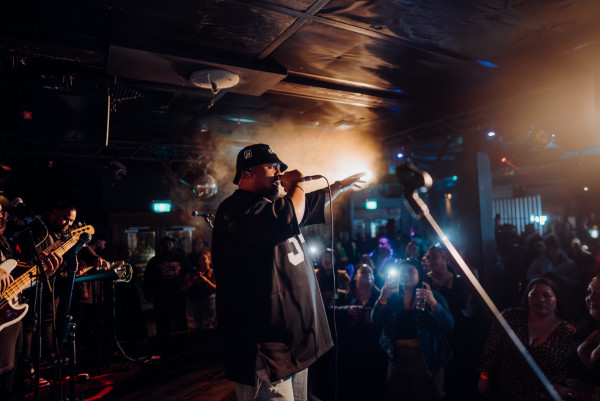 During Uike Kātoangaʻi ʻo e Lea Faka-Tonga, Tonga Language Week (16-22 August), Folau will perform at a number of schools in Auckland to celebrate lea faka-Tonga, encourage children to speak it and give others the chance to hear the language through music.
This year’s theme, “Ko ʻetau hiva, ko e feʻunu mahuʻinga ia ki he moʻui ʻa e Tonga – our music is a vital strand of our Tongan culture”, reflects the role music plays in Folau’s own life.
But Folau wants to do more than perform. He wants to help keep lea faka-Tonga alive for his children and future generations.
“I truly believe it's very important to keep it alive, because it's literally who we are as Tongan people. It's obvious that the language is slowly fading away with the next generation. I feel that I can still give them a glimpse of our culture through my music and I can still give them a glimpse of our culture.
If they listen to my music, I hope that I'd encourage them to learn to know their language in a way, but I also think the most important part is just being able to communicate with our oldies.”